 An official website of the United States government




We use matrix combination screening technology to quickly narrow down a long list of potential drug combinations and find those with the most potential to help patients.
About Matrix Combination Screening
Often, current medical treatments for a variety of diseases — including cancer, tuberculosis and brain disorders — involve administering more than just one drug, an approach known as combination therapy. Thousands of approved and investigational drugs can be combined in millions of possible pairings and dose variations. Clinicians often must make decisions based on trial and error, which is not optimal for the patient or the clinician.
With an increasing number of approved and investigational drugs, the discovery of novel drug combinations through clinical trial-and-error is not feasible. To address this inefficiency, our Chemistry Technology team uses matrix combination screening. This platform enables our scientists to quickly narrow down a long list of potential drug combinations and find those with the most potential to help patients.
Our matrix combination screening platform can rapidly test the effect of different drug combinations on cellular, molecular or biochemical processes that are relevant to a disease of interest. The Chemistry Technology team screens the best pairs to find the optimal concentration of each drug and learn more about their effect on cells, such as whether that combination is toxic. Scientists can use the results of these screens to pursue testing of promising drug combinations in animals and, ultimately, humans.
Through matrix combination screening, we aim to identify new drug combinations and prioritize highly effective drug combinations for translation into clinical trials and novel therapeutic regimens for patients.
Matrix Screening Program Goals
Through matrix combination screening, we aim to identify new drug combinations and to prioritize highly effective drug combinations for translation into clinical trials and novel therapeutic regimens for patients.
Specific objectives include:
- Repositioning of approved and investigational drugs in the context of combination regimens for cancer treatment; Comparing the drug-combination landscape of 30 cancer cell line models (>8,000 combination per cell line) to generate predictive models of drug-drug interactions; and
- Integrating the small-molecule vulnerabilities uncovered via the matrix screening platform with genetic dependencies identified by RNA interference or CRISPR screening to identify the molecular determinants of specific drug-response “signatures;” and Integrating biologics (antibodies, recombinant proteins, etc.) into the matrix screening platform.
Matrix Program News
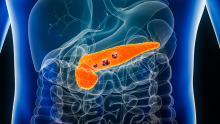
Turning to AI, NIH Scientists Reveal Promising Pancreatic Cancer Drug Combinations
May 29, 2025 - NCATS News
- Automation
- Compound Management
- Matrix Combination Screening
A collaborative research study screened existing drugs to identify drug combinations that could treat a complex cancer that’s hard to detect and resists treatments.