 An official website of the United States government




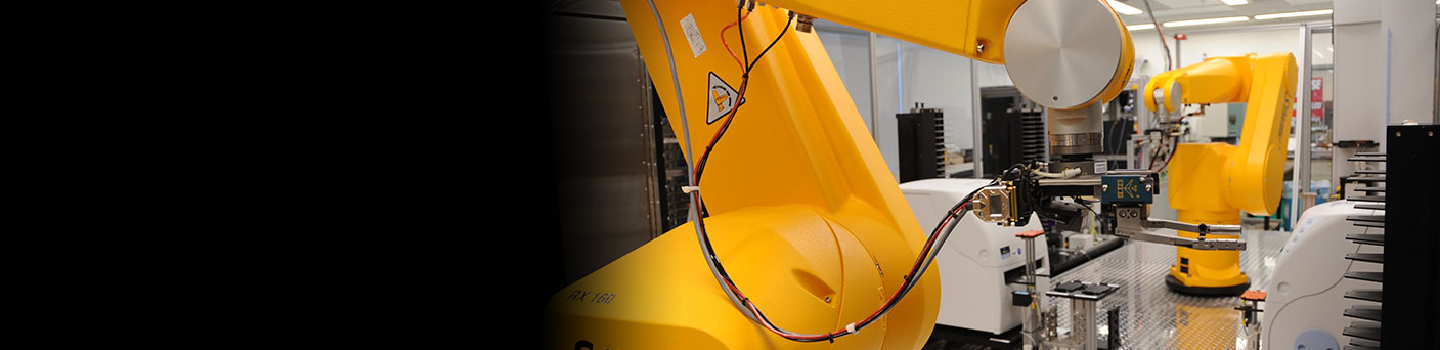
We support the maintenance, operation and continuous improvement of laboratory instrumentation and processes.
About Automation Automation News See More Automation News Related Research Annual Report: Website Annual Content Review
Dear webpage content owner:
Regularly reviewing and updating the NCATS website with accurate and current content will help our website remain a reliable source of information. At a minimum, all webpages will be reviewed yearly by the NCATS groups (content owners) responsible for its accuracy.
Receiving this email means you are the primary content owner for this/these webpage(s). Your role includes collaborating with the secondary reviewers to update webpage content.
Please review the following webpage(s). Note any secondary reviewers listed beside each page:
When reviewing the webpage(s), check for:
- Content accuracy
- Up to date information
- Functioning and correct links, including PDFs, PPTs, Excel files, etc.
- Relevant and updated images
Once your updates are ready (and have received any necessary approvals), follow these steps:
- Submit any edits in WebCATS . We recommend attaching a Word document with tracked changes. When reviewing your updates, we will also suggest ways to make the content easier to read.
- Note: All files to be posted (PDFs, PPTs, videos, etc.) will be subject to an accessibility check. These items should be remediated for Section 508 compliance prior to submission via WebCATS.
- If you have no edits to a webpage, email your Communications Branch liaison , including the webpage(s) URL, so we can check the page(s) off the list. We will then update the “Last updated on” date at the bottom of the webpage(s).
The deadline for submitting your updates is 10-30-2024. We appreciate your prompt attention. If you need assistance, feel free to reach out to your Communications Branch liaison .
Thank you,
NCATS Web Team
10-01 CARLEEN.KLUMPP-THOMAS@NIH.GOV
If you have already submitted request(s) in WebCATS, please disregard this email.
Dear webpage content owner:
Regularly reviewing and updating the NCATS website with accurate and current content will help our website remain a reliable source of information. At a minimum, all webpages will be reviewed yearly by the NCATS groups (content owners) responsible for its accuracy.
Receiving this email means you are the primary content owner for this/these webpage(s). Your role includes collaborating with the secondary reviewers to update webpage content.
Please review the following webpage(s). Note any secondary reviewers listed beside each page:
When reviewing the webpage(s), check for:
- Content accuracy
- Up to date information
- Functioning and correct links, including PDFs, PPTs, Excel files, etc.
- Relevant and updated images
Once your updates are ready (and have received any necessary approvals), follow these steps:
- Submit any edits in WebCATS . We recommend attaching a Word document with tracked changes. When reviewing your updates, we will also suggest ways to make the content easier to read.
- Note: All files to be posted (PDFs, PPTs, videos, etc.) will be subject to an accessibility check. These items should be remediated for Section 508 compliance prior to submission via WebCATS.
- If you have no edits to a webpage, email your Communications Branch liaison , including the webpage(s) URL, so we can check the page(s) off the list. We will then update the “Last updated on” date at the bottom of the webpage(s).
The deadline for submitting your updates is 10-30-2024. We appreciate your prompt attention. If you need assistance, feel free to reach out to your Communications Branch liaison .
Thank you,
NCATS Web Team
10-15
Automation Overview
Our automation experts are responsible for the maintenance, operation and continuous improvement of a full range of laboratory instrumentation and processes. These automation engineers and machinists support our activities in high-throughput screening and assay development and optimization.
Resources
Systems supported by the automation team include:
Primary Screening System
With three robotic arms for plate transportation, a storage capacity of more than 3 million compound wells (approximately 2,000 1,536-well compound plates), more than 1.5 million assay wells (approximately 1,100 1,536-well assay plates), and an ability to run multiple assays in parallel, NCATS can achieve world-class screening productivity while maintaining the high level of data quality required by researchers. Center experts have developed custom software to monitor and control the system, in addition to archiving the complete process history for every screen in real time.
Secondary Screening System
With two robotic arms for plate transportation and a storage capacity of nearly 1 million compound or assay wells (about 600 1,536-well compound or assay plates), we use this system to screen smaller scale compound libraries not present on the primary screening system. This platform is designed to complement the primary system, and it is easily customizable, allowing for the rapid integration of additional screening technologies.
Tox21 Screening System
This system contains a single robotic arm for plate transportation and a storage capacity of about 1.5 million compound wells (about 1,000 1,536-well compound plates) and more than 1.5 million assay wells (approximately 1,100 1,536-well assay plates). With a pin tool and two acoustic dispensers for compound addition, four low-volume dispensers for reagent addition, and three plate readers enabling a variety of assay detection methods, this system can rapidly screen, in triplicate, the Toxicology in the 21st Century (Tox21) library of 10,000 compounds. We monitor and control this system with the same custom software used for the primary screening system.
RNAi Screening System
This high-throughput system has two robotic arms for plate transportation with incubators for assay plate storage and plate stackers to facilitate continuous system operation. A multichannel pipettor, low volume dispensers, an aspirator for plate washing and two different plate readers support a wide variety of detection methods for this RNAi-focused system.